
A Teacher-Directed Digital Literacy Curriculum Designed for Real Classrooms
If you are being asked to “teach digital literacy” but are not given the time, tools, or structure to do it well, you are not alone. This page will help you understand what digital literacy instruction looks like in elementary school and whether a full K–5 curriculum is the right fit for your classroom.
Elementary teachers and technology specialists are expected to prepare students for online testing, digital research, and responsible technology use, often with just one class period per week and very little curriculum support.
This K–5 Digital Literacy Curriculum was created to solve that exact problem.
It provides a clear, structured, and developmentally appropriate approach to teaching digital literacy skills across all elementary grade levels without adding more work to your plate.
What Schools Mean by “Digital Literacy” (And Why It Feels So Confusing)
Digital literacy has become an umbrella term that can mean many things at once.
Teachers are told students need:
- Strong technology skills
- Online safety instruction
- Research readiness
- Keyboarding and device fluency
- Alignment to ISTE standards
But rarely are teachers given a clear plan for how those skills should be taught over time.
Digital literacy is not one lesson.
It is not one program.
And it is not something students master independently.
Digital literacy is a progression of skills that builds year after year through intentional instruction, modeling, and guided practice.
What Digital Literacy Looks Like in Elementary School
A strong digital literacy curriculum builds skills in a logical sequence across grade levels, rather than offering disconnected activities.
Primary Grades (Kindergarten–Grade 2)
Students learn how to:
- Log in and navigate a device
- Use a mouse or trackpad with control
- Recognize icons, menus, and buttons
- Begin keyboarding skills
- Follow teacher-led demonstrations
- Practice safe and responsible device use
Instruction at this level is highly visual, teacher-directed, and routine-based.
Intermediate Grades (Grades 3–5)
Students progress to:
- Managing files and organizing digital work
- Keyboarding with accuracy and efficiency
- Conducting online research
- Evaluating websites and information
- Using presentation and productivity software
- Practicing responsible digital citizenship
Each skill builds directly on what was introduced in earlier grades.
This curriculum is designed so nothing is taught in isolation and nothing is repeated without purpose.
View the full K–5 digital literacy scope and sequence by clicking here
Why Digital Literacy Must Be Teacher-Directed
Digital literacy is not something students learn by clicking through a program on their own.
Especially in elementary school, students need:
- Clear modeling
- Shared vocabulary
- Guided practice
- Predictable routines
Early readers cannot independently navigate text-heavy platforms.
Even older students benefit from teacher-led instruction that explains why tools are used, not just how.
This curriculum is intentionally teacher-directed, not self-paced.
You demonstrate the skill.
Students practice it with guidance.
Confidence and independence develop naturally over time.
What This Is (and What It Is Not)
- This curriculum is not a self-paced program students click through independently.
- It is not a collection of disconnected activities or apps.
- It is a structured, teacher-led sequence designed to build skills intentionally over time
Yes, This Works With Once-a-Week Instruction
Many elementary technology classes meet only once per week for 45 minutes.
That does not mean meaningful digital literacy instruction is impossible.
It means the curriculum must be:
- Well sequenced
- Highly structured
- Built around consistent routines
Skills develop because:
- Repetition strengthens memory
- Predictable lesson flow reduces confusion
- Each week builds on the last
This curriculum was designed specifically for limited instructional time.
A Proven Structure for a 45-Minute Digital Literacy Lesson
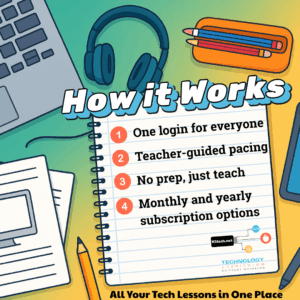
Each lesson follows a predictable format that works across all grade levels:
Warm-Up (5 minutes)
Typing practice, mouse skills, or review prompt
Mini Lesson and Teacher Demonstration (10 minutes)
Clear, visual instruction of the new skill
Guided Practice or Project Work (20 minutes)
Students apply the skill in a structured task
Reflection or Exit Ticket (5 minutes)
Quick assessment and reinforcement
Log Out and Clean Up (5 minutes)
Routine building and responsibility
This structure reduces behavior issues, increases student confidence, and saves planning time.
Why a Full Digital Literacy Curriculum Matters
Many teachers start by searching for individual digital literacy lessons or activities. Over time, they realize that students need consistency, shared vocabulary, and repeated practice across grade levels.
A full curriculum ensures:
- Skills are not skipped or repeated randomly
- Students build confidence year after year
- Teachers are not reinventing instruction each week
What Is Included in the K–5 Digital Literacy Curriculum
This is a complete, year-long digital literacy curriculum for elementary students.
You receive access to:
- Over 200 ready-to-teach lessons and activities
- A clear K–5 scope and sequence
- Digital citizenship and internet safety instruction
- Keyboarding and mouse skills practice
- Online research lessons
- Software instruction for Google and Microsoft tools
- Coding and computer science foundations
- Student-friendly lesson pages
- Teacher rationale and editable planning materials
- Auto-login access for students
Standards Alignment Without the Guesswork
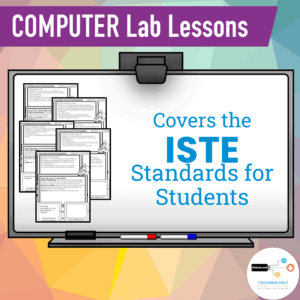
All lessons are built for the ISTE Standards for Students and designed to support broader digital citizenship expectations.
You do not need to interpret dense standards language or create alignment documents.
The curriculum is already structured to meet expectations while remaining practical for classroom use.
Who This Digital Literacy Curriculum Is For
This curriculum is ideal for:
- Elementary computer lab teachers
- Technology specialists
- Media specialists
- Classroom teachers with scheduled lab time
- Homeschool families seeking structured tech instruction
It is especially helpful if:
- You teach technology once per week
- You want students prepared for online testing
- You need lessons that are clear and classroom-ready
- You do not want a self-paced program replacing instruction
Why This Curriculum Was Created
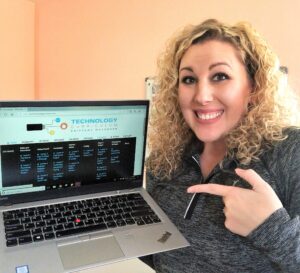
My name is Brittany Washburn, and I created this curriculum while teaching elementary technology with almost no materials.
I spent nights and weekends searching for ideas because I knew my students deserved more than random activities.
Eventually, I built a structured system using a class website and teacher-led instruction. Planning became manageable. Lessons became consistent. Students grew confident.
Over time, I refined and expanded the curriculum to fully align with digital literacy standards across grades K–5.
Now, it is available to teachers who want structure without burnout.
Get Started With the K–5 Digital Literacy Curriculum
You can choose:
- A monthly subscription
- A yearly subscription
- Individual grade-level access
All plans include access to the curriculum and updates.
Explore the K–5 Digital Literacy Curriculum
(View sample pages and FAQs)
You do not need more apps.
You do not need more planning time.
You just need a clear, well-designed digital literacy curriculum that works.
SPECIAL OFFER: Click here and use the code TRYK5TECH1 at checkout to subscribe and get the first month for just $1 (regularly $15 per month)!
Or click here and learn more about this curriculum by watching a video overview and reading the FAQs.

Technology Teacher Resource Guide FREEBIE
Are you a new technology teacher or just interested in learning how another technology teacher gets organized at the beginning of the school year? This resource guide includes everything you need to know to give your students a great start.
As a free “resource guide” this PDF gives you tips and information as well as links to free and paid resources that might benefit you as a technology teacher.
Research-Based Digital Literacy Curriculum
This digital literacy curriculum is built on a research-informed instructional framework designed to help elementary students develop real technology skills through structured learning experiences. Rather than assuming students will naturally develop digital skills simply by using devices, the curriculum emphasizes explicit instruction, guided practice, and hands-on application of essential technology concepts.
The instructional design reflects widely supported research in digital literacy education and cognitive science. Skills are introduced gradually and reinforced through a carefully designed scope and sequence so students can build confidence and independence using technology tools.
Students practice essential digital literacy skills such as:
• file and folder organization
• responsible technology use
• digital research and information evaluation
• productivity tools like documents, slides, and spreadsheets
• computational thinking and problem solving
This approach helps students move beyond basic device use to develop true digital competence that supports learning across subjects.
To learn more about the research foundations and instructional framework behind the curriculum, visit the Research & Evidence section on the main site.